
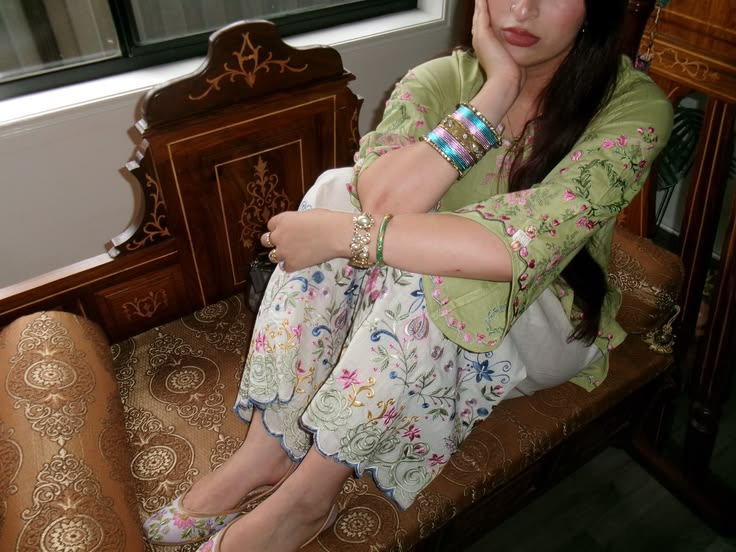

Ask your mother what Eid shopping looked like in 1999. She will probably describe crowded bazaars, bolts of fabric and a long wait at the tailor’s shop. Ask your younger cousin today, and she will talk about online launches, ready to wear sets and doorstep delivery.
A lot has changed in just over 25 years. Fabrics, cuts and the way we shop have all moved on. Yet some Eid traditions feel exactly the same. Here is a look at how Pakistani Eid fashion has changed, decade by decade, and what has stayed close to our hearts.
The Late 1990s: Fabric and the Family Tailor
In the late 1990s, most Eid outfits began as plain fabric. Families bought cloth from the bazaar early in Ramadan, often in matching prints for sisters and cousins. The tailor decided much of the final look, from the neckline to the trouser cut.
Embroidery was usually added at small workshops, or bought separately as laces and patches. Designer wear existed, but it was limited to a handful of boutiques and mostly saved for weddings. On Chaand Raat, the tailor’s shop was the busiest place in the neighborhood. Everyone waited anxiously for last minute stitching, and a missing button could cause real panic.
The 2000s: Designer Labels Step In
The new decade brought a big shift. Designer labels began opening their own stores, and Eid slowly turned into a launch season. Brands such as Maria.B., founded in Lahore in 1999, were part of this wave. They offered embroidered fabric sets with the neckline, borders and dupatta already designed, so the tailor only had to stitch.
Lawn also grew into a national obsession. Printed and embroidered lawn collections drew long queues outside stores. New shopping malls in Lahore and Karachi made it easy to browse several brands in one trip. Eid outfits became a chance to wear the season’s newest prints and show them off at family gatherings.
The 2010s: The Pret Boom
By the 2010s, life had become busier, and many women had less time to chase tailors. Pret, or ready to wear, filled the gap. Brands launched stitched Eid collections in standard sizes, so you could buy an outfit and wear it the same day.
Social media changed the game too. Lookbooks moved from glossy magazines to Facebook and Instagram. Shoppers could browse a full collection, save styling ideas and share favorites with friends in minutes. Celebrity campaigns helped certain looks spread across the country almost overnight, and Eid collections began to sell out faster than ever.
Silhouettes Through the Years
Cuts have swung back and forth more than once. Here is a rough guide to the looks many of us remember.
| Era | Shirt | Bottoms | Overall feel |
| Late 1990s | Loose, below the knee | Wide shalwar | Simple and modest |
| Mid 2000s | Short and fitted | Churidar, tights or capri pants | Sleek and youthful |
| 2010s | Long frocks and anarkalis, then straight cuts | Cigarette pants, then palazzos | Dramatic, then tailored |
| 2020s | Longer, looser shirts and kaftans | Flared pants, shararas and ghararas | Comfortable and festive |
Many of today’s favorites are old styles coming back. The gharara your grandmother wore in old photos is once again an Eid staple.
The 2020s: Online, Global and Comfortable
Today, Eid shopping often happens on a phone. Collections launch online, sell out within hours and ship around the world. For families in the UAE, the UK or the US, that means wearing the same Eid styles as relatives back home, without carrying a suitcase full of fabric.
Comfort has become a priority as well. Many women now choose breathable fabrics, easy shapes and pieces they can wear again after Eid. Pastels, mirror work and hand embellished details sit alongside clean, modern cuts. Matching outfits for mothers and daughters are more popular than ever, and men’s kurtas now often join the coordinated family photo.
What Has Not Changed
Some things stay exactly the same. The excitement of Chaand Raat still fills homes and markets. Women still line up for glass bangles and fresh mehndi. Elders still hand out Eidi, along with an honest opinion on your outfit.
The love of fine embroidery runs as deep as ever, too. Zardozi, gota and resham work have survived every trend, from short kurtas to kaftans. And whether your outfit came from a tailor or a website, putting it on Eid morning still brings the same feeling of a fresh start.
Final Word
Pakistani Eid fashion has traveled a long way since 1999. Bazaar fabric gave way to designer collections, then to pret and online shopping. Cuts have changed many times, and they will keep changing. The reason we dress up has stayed the same. Eid is about celebrating with the people we love, and looking our best while we do it.